What Exactly Is a Digital Wallet? Are Your Bitcoins Really Inside It?
Published: 2026-08-27 09:25
Views: 2,298

Like and follow for 3-5 new posts every week↓
Many people new to blockchain naturally think:
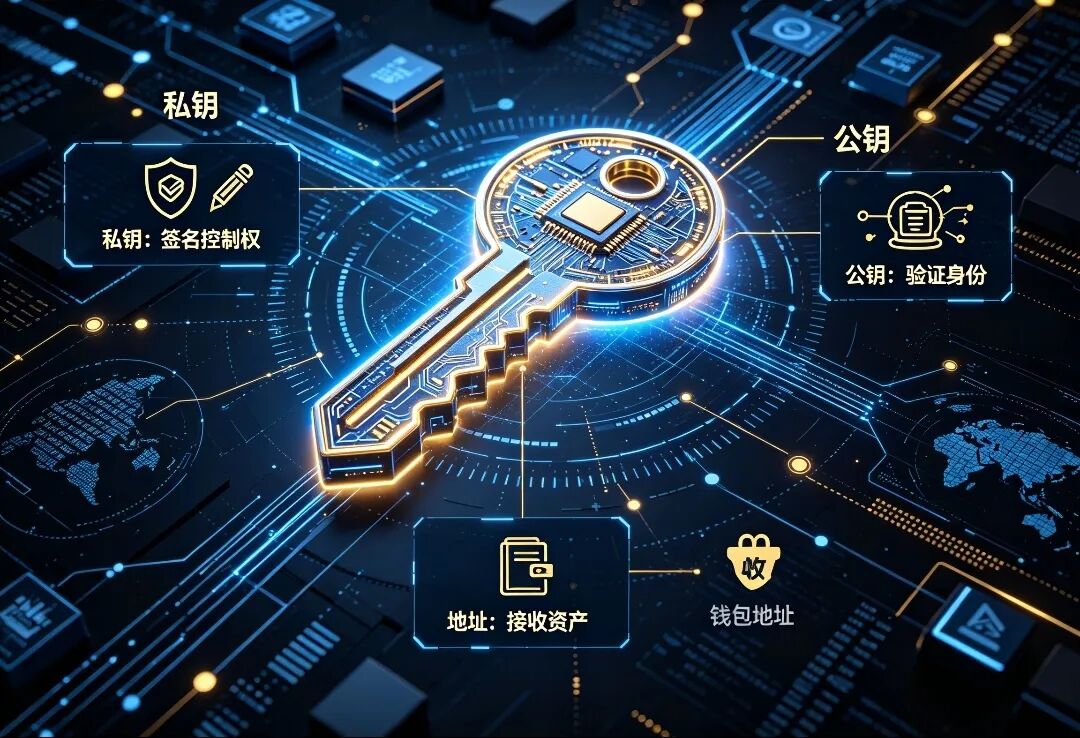
“I bought some Bitcoin—shouldn’t I put it in a wallet?”But strictly speaking, that understanding isn’t quite accurate.Because when you open a digital wallet, there’s no pile of Bitcoin sitting inside.So where did the coins go?Let’s start with the most common misconceptionA digital wallet doesn’t actually “hold” your Bitcoin.Bitcoin is always recorded on the Bitcoin blockchain ledger.What a wallet actually manages is a set of keys that prove you have the right to use those assets.That sounds a bit confusing.Let’s look at it differently.Imagine you have a bank account.The money isn’t stored in your phone.The banking app on your phone just lets you check your balance and make transfers.A digital wallet is similar.Behind a traditional bank account, the bank manages permissions for you.But with many blockchain wallets, the key authority over your assets is in your own hands.Why Is the Private Key So Important?
Think of blockchain assets as a ledger.The private key is like a very important key.Whoever can use that key correctly can initiate transactions according to the network’s rules.That’s why you’ll often see this phrase:“Not your keys, not your coins.”If the private key isn’t in your hands, you may not have full control over your assets.That’s also why many people draw a clear line between keeping assets on an exchange versus managing them in their own wallet.Exchange accounts are convenient.But from a technical standpoint, they’re not the same as a wallet where you hold the private keys.So What’s a Wallet “Address”?
If the private key is the key,then the wallet address is like a “receiving identifier” that others can use to send you assets.You want a friend to send you some digital assets.You don’t need to give them your private key.You just share your receiving address.Your friend initiates a transaction to that address.Once the network confirms it,the records for those assets change.Here’s something to always remember:Private keys must never be shared casually.They’re completely different things.What About Seed Phrases?
When you first create certain digital wallets,you might see a string of English words.These are usually called:seed phrases (or recovery phrases).“Isn’t this just a login password?”Its importance is usually far greater than a regular login password.In wallets that use seed phrases, the phrase can be used to restore the wallet and its associated keys.So if someone else gets your seed phrase,And the reverse is also true.If you lose your seed phrase and have no other reliable recovery method,you may never regain access to your original wallet.This is one of the harshest realities of digital assets:There’s no bank counter to reset everything for you.Why Are There“Hot Wallets” and“Cold Wallets”?
This is another key concept.generally refers to a wallet that’s connected to the internet and easy to use.Mobile apps, browser extensions, and similar tools fall into this category.The advantage is obvious:Transfers, trades, and connecting to on-chain apps are all easy.But the flip side of convenience is greater exposure to online risks.Cold wallets take a different approach.Their core goal is to keep private keys as isolated from the internet as possible.That’s why many people consider cold wallets for long-term storage of digital assets.But don’t mistake a cold wallet for:“Once I buy one, I’m 100% safe.”Seed phrases can be lost.Users can fall for phishing scams.Or even send assets to the wrong address due to their own mistakes.Technology can reduce some risks,but it can’t eliminate all of them for you.Why Does a Digital Wallet Really Test Your Security Awareness?
In the traditional banking system,if you forget your password,there are usually recovery options like password reset, identity verification, and customer support.But with self-custody blockchain wallets, that’s often not the case.but you also take on more responsibility.More freedom comes with more responsibility.This is one of the most important differences between digital assets and traditional finance.So What’s the “Wallet” on an Exchange?