
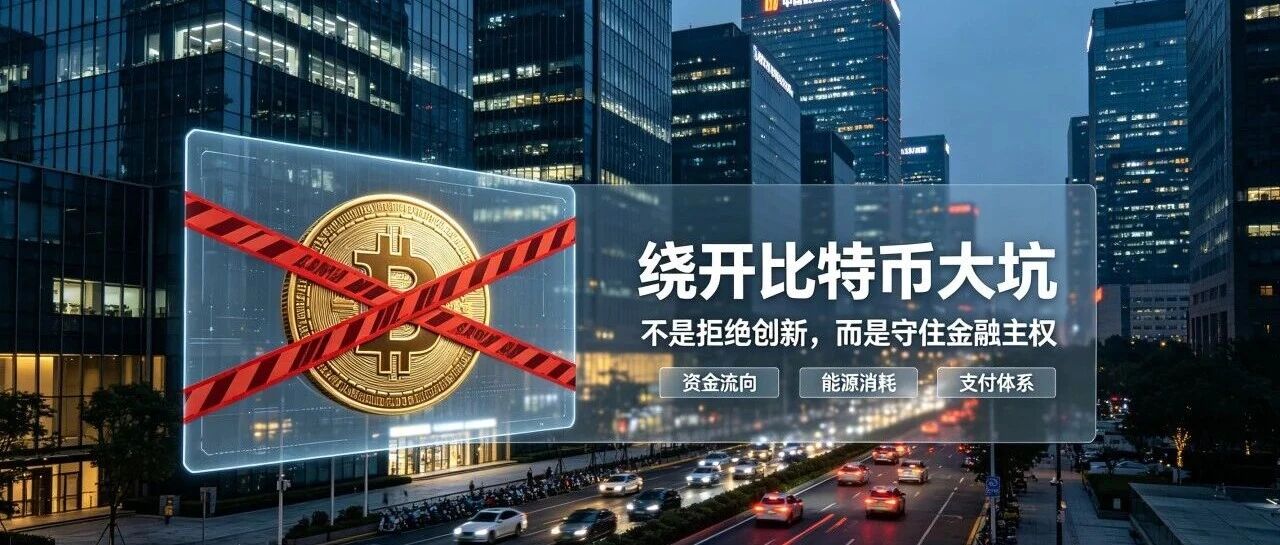
In February 2026, the People's Bank of China, together with the National Development and Reform Commission, the China Securities Regulatory Commission, and five other government agencies, issued the "Notice on Further Preventing and Addressing Risks Related to Virtual Currencies and Other Matters."
This is nothing new—China's restrictive policies on Bitcoin date back to 2013, escalated to a full ban in 2021, and have now been upgraded to comprehensive, end-to-end oversight this year.
Meanwhile, across the Pacific, the United States is doing something entirely different. In May 2026, Representative Nick Begich introduced the "American Reserve Modernization Act," which would place roughly 328,000 Bitcoins seized by the government into a strategic reserve, locked for 20 years with no sales allowed. Senator Lummis has gone even further, pushing the "BITCOIN Act" that requires purchasing 1 million Bitcoins within five years.
One country is pushing it away with all its might; the other is pulling it in with equal force.
China may appear to be abandoning Bitcoin, but in reality, it's playing a much bigger game.

Let's start with mining. Before the 2021 ban, China accounted for over 65% of global Bitcoin hashrate. Once the ban took effect, mining rigs were sold off or relocated, with most heading to the United States, Kazakhstan, and Russia. On the surface, it looked like a complete "wipeout."
But by October 2025, China's share of Bitcoin hashrate had quietly rebounded to 14%, reclaiming third place globally, behind only the United States and Kazakhstan. Then in December, mining farms in Changji and Hami, Xinjiang, were suddenly hit with power outages, taking roughly 400,000 mining rigs offline and causing the network's total hashrate to drop 10% in a single day.
This approach is telling: it's not about banning mining outright, but about preventing it from being done on a grand, conspicuous scale. Regulation has evolved from a solo effort by the central bank to a coordinated campaign involving 13 agencies, including the NDRC and the Central Financial Commission. What does the NDRC's involvement signal? It means virtual currency mining has been classified as a systemic risk threatening national energy security and industrial safety.
At the same time, China is advancing another track: the digital yuan. In January 2026, a new management framework for the digital yuan took effect. By June, the Digital Yuan International Operations Center signed agreements with the first batch of 26 financial institutions, and the cross-border settlement platform "Shubida" was launched. Leveraging the multilateral central bank digital currency bridge, 49 commercial banks have joined, 21 of which are overseas banks.
See the pattern? China isn't rejecting digital currencies—it's rejecting digital currencies issued by others.

Who created Bitcoin? Satoshi Nakamoto, whose identity remains unknown to this day. Its issuance mechanism is not controlled by any sovereign state. For any sovereign nation, allowing a currency beyond its control to circulate domestically is tantamount to ceding the power of currency issuance. And what is that power? It's a core component of national sovereignty.
That's why China's 2026 Notice spells it out clearly: Bitcoin, Ethereum, and Tether have no legal tender status, and related activities constitute illegal financial operations. It also explicitly prohibits issuing stablecoins pegged to the yuan overseas without approval.
The U.S. logic is the polar opposite. It wants to turn Bitcoin into a national reserve asset, locked away for 20 years. Why? Because America is the biggest beneficiary of Bitcoin—the world's largest mining operations are in the U.S., the largest exchanges are there, and the largest institutional holders of Bitcoin are American. The more valuable Bitcoin becomes, the more valuable America's holdings are.
But there's a massive pitfall here: Bitcoin's price volatility. In December 2025, Bitcoin briefly fell below $85,000, dropping over 7% in a single day. Building a national strategic reserve on an asset that can lose 7% in one day—what kind of move is that? It's like swapping the central bank's gold reserves for a stock with ten times the volatility of gold.
China has chosen to sidestep this pitfall and forge its own path—using the sovereign-backed digital yuan to compete in the global digital currency arena. This isn't conservatism; it's strategic resolve.

From an individual perspective, how do the gains and losses stack up?
Gains: Ordinary Chinese investors have been spared Bitcoin's roller-coaster ride. Stories of "accounts halved overnight" or "trading platforms suddenly inaccessible" are virtually unheard of domestically. Court rulings are also clear: in one case, an investor put 1.05 million yuan into virtual currencies via a livestream, failed to withdraw, and sued—the court ruled the transactions invalid, with the investor bearing the losses. At least legally, if you don't touch it, you're safe.
Losses: Missing out on a global investment opportunity. Bitcoin has gone from a few dollars to tens of thousands, multiplying tens of thousands of times over. If you'd bought in 2013 and held until today, the returns would indeed be staggering. But the risks accompanying those returns are equally staggering—and within China, your trades aren't protected by law.
There's a deeper loss that many may not realize: the biggest loss isn't failing to make money—it's being shut out of participating in a global experiment in reshaping the financial order. Whatever Bitcoin's ultimate fate, it's testing the proposition of "a currency without a central bank." Ordinary Chinese people are insulated from this experiment—safe, but also cut off.

If we look back 20 years from now—when America's Bitcoin reserve has truly been locked for two decades, and China's digital yuan has already covered cross-border settlements in dozens of countries—will the answer to "who dodged the pitfall and who jumped in" still be as clear-cut as it seems today?
One piece of actionable advice: don't base your personal investment decisions on a simple imitation of national strategy. A country's balance sheet and your balance sheet are not the same document.#Bitcoin #DigitalYuan #VirtualCurrency #Crypto #Mining