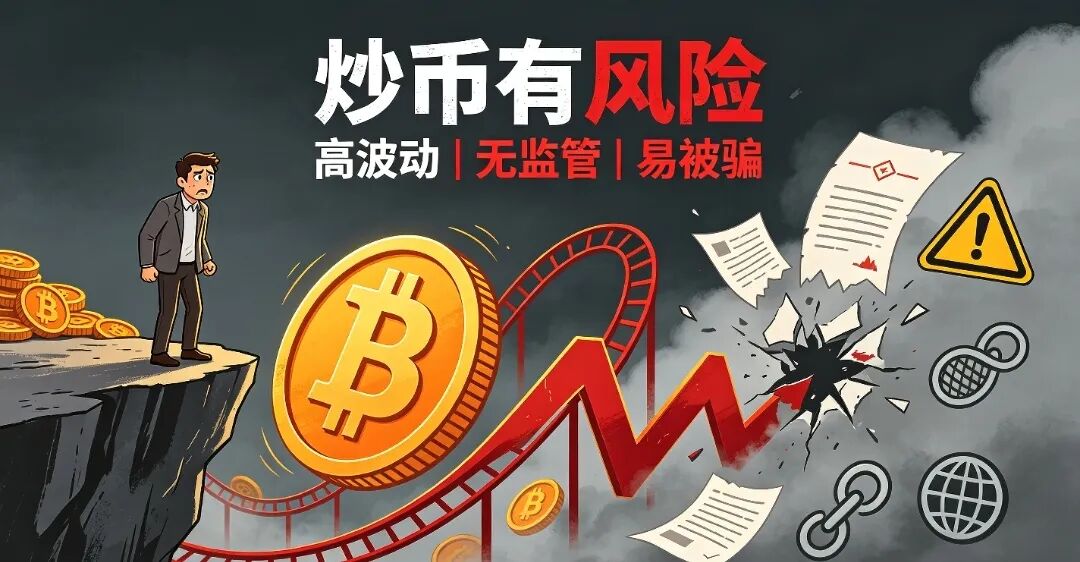
What Is Bitcoin? A Complete Guide to Its Origins, Risks, and Official Stance
Published: 2026-08-27 16:01
Views: 1,612

People around you are always talking about Bitcoin. Some call it the currency of the future; others dismiss it as a bubble designed to fleece retail investors. Many are left confused by all the noise. Today, in plain language, we'll walk you through Bitcoin's full story—its origins, hidden risks, and China's regulatory stance—so you'll never be fooled again.I. Bitcoin in a Nutshell: What Exactly Is It?
Bitcoin is a decentralized cryptocurrency that officially launched in 2009, and it is also the world's first product of blockchain technology.In simple terms: it is not issued by any government like the yuan or the dollar, and no bank or central bank controls it. Its total supply is hard-coded into the system—there will only ever be 21 million coins, and no more can ever be minted. It was born from a set of network protocols and runs on countless computers worldwide. Everyone shares one public ledger that cannot be altered, frozen, or seized.What draws people in is its decentralization, lack of oversight, scarcity, and the ability to transfer funds globally at any time. But precisely because "no one is in charge," it is inherently speculative, high-risk, and unprotected by law. All coins are expected to be mined by 2140, with no arbitrary issuance.When you own Bitcoin, what you really hold is a unique password (private key). As long as that key stays secret, no one can touch your assets. With an internet connection, you can transfer funds across borders without going through a bank.II. A Brief History of Bitcoin: From Pennies to a Sky-High Legend
1. The Birth
When the global financial crisis hit in 2008, cracks in the traditional financial system were exposed. A developer using the pseudonym "Satoshi Nakamoto" published a whitepaper proposing a peer-to-peer electronic cash system. In 2009, the first block was mined, and Bitcoin was officially born—initially worth almost nothing.2. Early Wild Growth
In the early days, only tech enthusiasts tinkered with it. As blockchain gained traction, the price skyrocketed. In 2017, the first major bull run pushed prices past $20,000, drawing in countless ordinary investors. Meanwhile, a flood of scam coins and pyramid schemes used Bitcoin's name to fleece the unwary.3. A Speculative Game of Boom and Bust
Bitcoin has no physical asset backing it; its price is driven entirely by market speculation. In a bull run, it can multiply dozens of times in a year; in a downturn, it can halve in days. Daily swings of over 20% have occurred, making overnight millionaires—and also bankrupting many who bet wrong.III. Four Core Risks You Must Understand—Stay Away, Ordinary Investors
1. Extreme Price Volatility and Intense Speculation
Bitcoin lacks the credit backing of legal tender. Its ups and downs are driven entirely by capital flows, media hype, and overseas policies, with no price limits. Ordinary investors simply cannot predict the market, and most retail traders who jump in on hype end up losing money.2. A Ready-Made Tool for Money Laundering and Illegal Transactions
Bitcoin transactions are anonymous and cross-border, operating outside regulatory oversight. This makes it a channel for cross-border money laundering, telecom fraud, and illicit fund transfers—existing entirely outside the legitimate financial system.3. Zero Protection for Your Assets
If you lose your private key, an exchange goes bankrupt, or hackers steal your coins, there is no institution to help you recover anything. Your assets can vanish in an instant with no recourse.4. Endless Scams
The market is flooded with山寨coins and "air coins" that masquerade as "Bitcoin-like" investments, packaged as high-yield wealth products. In reality, they are pyramid schemes designed to prey on unsuspecting everyday people.IV. What Does the Chinese Government Say? The Stance Is Crystal Clear
China's regulators have been consistent in their stance on Bitcoin, issuing multiple policies to draw clear red lines:As early as 2013, five government agencies made it clear: Bitcoin is a specific virtual commodity, not legal tender, and cannot be used as currency in circulation. Financial institutions are prohibited from engaging in related businesses.In 2017, seven agencies halted initial coin offerings (ICOs) and shut down all domestic Bitcoin trading platforms to curb chaos in the crypto space.In 2021, ten agencies jointly issued a document declaring Bitcoin-related activities illegal financial activities, comprehensively banning virtual currency trading, exchange, and mining. Overseas exchanges are also barred from offering services to mainland residents.The latest regulatory guidance reiterates: virtual currency trading and speculation disrupt financial order and harm people's property safety. Such transactions are not protected by Chinese law, and any losses incurred are borne by the participants themselves.In short: the Chinese government does not recognize Bitcoin as currency in any form. Trading and speculating in Bitcoin is illegal, and ordinary citizens are strongly discouraged from participating.V. A Final Word of Caution
At its core, Bitcoin is a cryptographic distributed ledger that has been repackaged by capital as a speculative asset—not a wealth-building tool for ordinary people. If you want to preserve your wealth, stick to regulated options like bank deposits, government bonds, and legitimate mutual funds. Stay away from virtual currency speculation and protect your hard-earned money.Do you know anyone who trades Bitcoin or other cryptocurrencies?What's the most outrageous crypto scam you've ever heard of?Drop your thoughts in the comments below!#Bitcoin #Cryptocurrency #InvestmentPitfalls #FinancialLiteracy #StayAwayFromCrypto